

When I first sat down to audit my sleep, I didn’t realize just how many moving pieces were involved. My current, evolved sleep mantra is simple: Guard your sleep routine like your life depends on it, because it absolutely does.
During the early stages of my healthspan journey, I had no real way of knowing how well my adjustments were working. Sure, I could feel better or more energetic on certain days and assume I slept well. Or I could feel sluggish, dealing with brain fog, and blame a bad night’s sleep.
But feeling-based tracking is full of noise. That lethargy could easily be caused by what I ate the day before, or an unnoticed exposure to environmental toxins like poor indoor air quality. I needed objective data.
The 8X Breakthrough: Overcoming Data Reluctance
For years, I actively avoided wearing my smart watch to bed. If you’ve ever seen a Garmin Fenix watch, you know they are serious, robust pieces of hardware. I originally had a Fenix 6X when I started this journey, and I now utilize the Fenix 8X. With the standard heavy bands, I originally felt like I just needed some “alone time” away from the device at night.
However, committing to wearing it overnight completely unlocked my tracking. To make it more comfortable I switched to a lightweight, fast drying, band with Velcro securing pads.
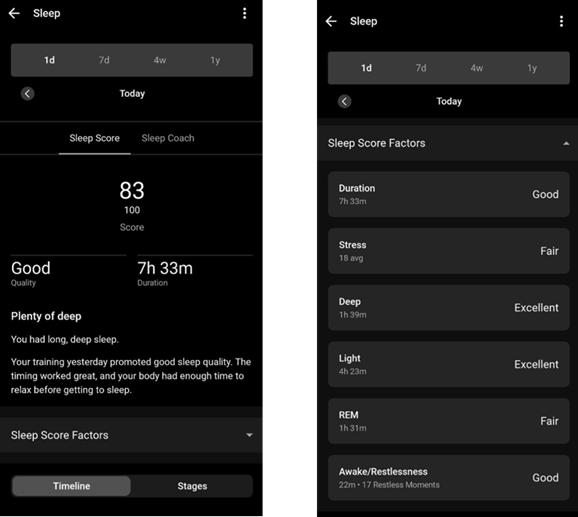
Monitoring metrics like Sleep Score, Duration, Stress, Deep Sleep and REM Sleep is the only way to truly understand your sleep activity. For me, hitting a consistent 7 to 8 hours with optimized deep and REM cycles is the ultimate “plus” on my daily health accounting sheet. It is foundational for mental, physical, and cellular recovery.
The Protocol: My Core Sleep Pillars
Through years of peer-reviewed reading, research, and relentless trial and error, I’ve dialed in the specific “prongs” that contribute to a calm, restorative, and brain-recharging sleep.
1. Timing & Circadian Rhythm
Strict Windows: Go to sleep and wake up within the exact same 30-minute window every day to synchronize circadian rhythms.
The Noon Cutoff: No caffeine after 12:00 PM. Its sleep-disrupting impacts extend far longer into the evening than most people realize.
2. Metabolic Management
The Fasting Buffer: Stop eating 2.5 to 3 hours before bedtime. If your body is busy redirecting blood flow to digest food in your stomach, that blood isn’t available to clear waste and “flush” your brain while you sleep.
Alcohol Timing: Avoid alcohol within 3 hours of bed. If consuming it earlier, strictly limit intake (maximum 1 drink for women, 2 for men) to protect REM cycles.
3. Activity & Physiology
Daytime Output: Consistent daytime exercise drives the physiological need for restorative deep sleep.
The Evening Cool-Down: No strenuous physical activity or targeted exercise within 2 to 3 hours of bedtime. You need this window to let your core body temperature and heart rate drop.
Targeted Compression Recovery: On days featuring high-intensity workouts or heavy physical property maintenance, I utilize compression therapy (legs and hips) before winding down. By flushing metabolic waste and accelerating muscle recovery early, it prevents late-night restlessness and muscle aches that disrupt deep sleep cycles.
4. The Sleep Environment
Light Auditing: Minimize blue light sources after twilight. Wear high-quality blue-light-filtering glasses if screens are unavoidable.
Thermal Optimization: Sleep in minimal clothing (just underwear) or no clothing to prevent nighttime overheating. Also, only use sheets and blankets when necessary to not feel cold.
Grounding: Utilize grounding sheets and pillowcases, maximizing direct skin contact to lower systemic inflammation while resting.
5. Targeted Supplementation
Magnesium Glycinate: Taking high-quality magnesium glycinate before bed aids muscular and nervous system relaxation.
Calm Sleep Capsules: On non-exercise days when my body isn’t naturally exhausted, I sometimes utilize a clean sleep capsule blend for an extra recovery assist.
Your Turn to Audit
Looking at this entire protocol at once can feel overwhelming. But just like the Master Accounting Spreadsheet you received in your inbox if / when you subscribed, you don’t have to change everything on day one.
Pick two or three variables this week. Track them. Look at your watch, band or ring data. See what moves your personal needle, and discard what doesn’t.
Let’s get to sleep, and let’s get to work.
Disclaimer: I am not a doctor or medical professional. The content shared through The UUHF Life is for informational and educational purposes only, based on my personal N-of-1 experience and research. Always consult with a qualified healthcare provider before making changes to your medication, diet, or exercise routine.